
What Does the Sale of 1165 Broadway Mean?
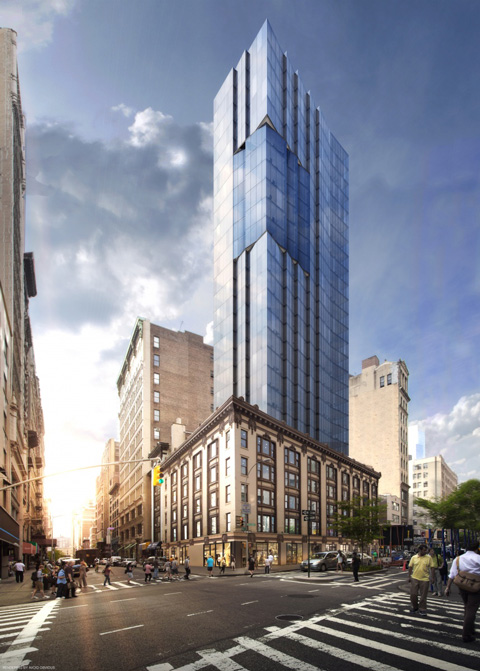
1165 Broadway — located on the opposite corner of the block from 1181 Broadway, which I wrote about previously — sold for $56 million, or approximately $965 per square foot.
At first glance, that seems like an aggressive price for an outdated office building in NoMad. However, the current retail roster tells a more compelling story. With tenants such as Aesop, Christian Louboutin, and music publisher Primary Wave, the property benefits from strong, long-term credit tenancy at the base.
How Does the New MSMX Zoning Affect Redevelopment Potential?
The property falls within the MSMX district, but it is also located within the Madison Square North Historic District, which makes any redevelopment strategy materially more complicated.
Under the new zoning, the site appears to support approximately 170,000 buildable square feet for a future project. That said, realizing that potential would likely require vacating the building and securing Landmarks approval — a process that can be both time-consuming and expensive.
Even so, the buyer’s basis is now roughly $329 per buildable square foot, before factoring in any future air rights acquisitions.
What Strategy Is the New Owner Likely Pursuing?
The buyer is likely underwriting this as a covered land play with a long-term redevelopment thesis.
More specifically, they are probably betting on the ability to eventually reposition or redevelop the asset by building additional density above the existing structure, assuming they can navigate the required approvals. Given that a full entitlement and approval process could easily take 2–3 years, the likely strategy is to sit on the asset, collect income, and pursue redevelopment once capital markets improve and interest rates become more favorable.
What Does This Mean for Other Property Owners in the Area?
The sale of 1165 Broadway is a strong signal that even if an MSMX site is not immediately shovel-ready, investors are still willing to pay for long-term optionality.
In other words, while many owners may feel today is not the ideal moment to redevelop, well-located properties in newly rezoned districts can still command significant value if the buyer has patient capital and a long enough investment horizon.
This is exactly where generational opportunities tend to emerge: when today’s income does not yet fully reflect tomorrow’s zoning potential.